The Rise of Streetwear: From Skate Shops to a $185 Billion Industry

The Rise of Streetwear: From Skate Shops to a $185 Billion Industry
Streetwear is the only fashion movement in modern history that started with zero industry backing, no runway shows, and no fashion week invitations and still managed to take over everything. What began as a loose exchange between New York hip-hop kids and California skaters in the late 1980s is now a global market valued at $185.5 billion, with projections suggesting it could reach $360 billion by 2033, according to a 2024 industry forecast drawing on multiple market research sources.
That trajectory is extraordinary by any measure, but the more interesting story isn't the money. It's how a subculture built on anti-establishment credentials became the establishment it was rebelling against and what that tension is doing to the culture right now.
Where Streetwear Actually Came From
The origin story gets simplified constantly, usually into a tidy line about hip-hop and skateboarding colliding. The reality is messier and more interesting. Shawn Stüssy was selling hand-signed surfboards in Laguna Beach in the early 1980s before he started printing T-shirts. Those shirts graphic, limited, distributed through a tight network of surf and skate shops established a template that every subsequent streetwear brand has essentially followed: make something scarce, make it feel like it belongs to a specific community, and let the community do the marketing for you.
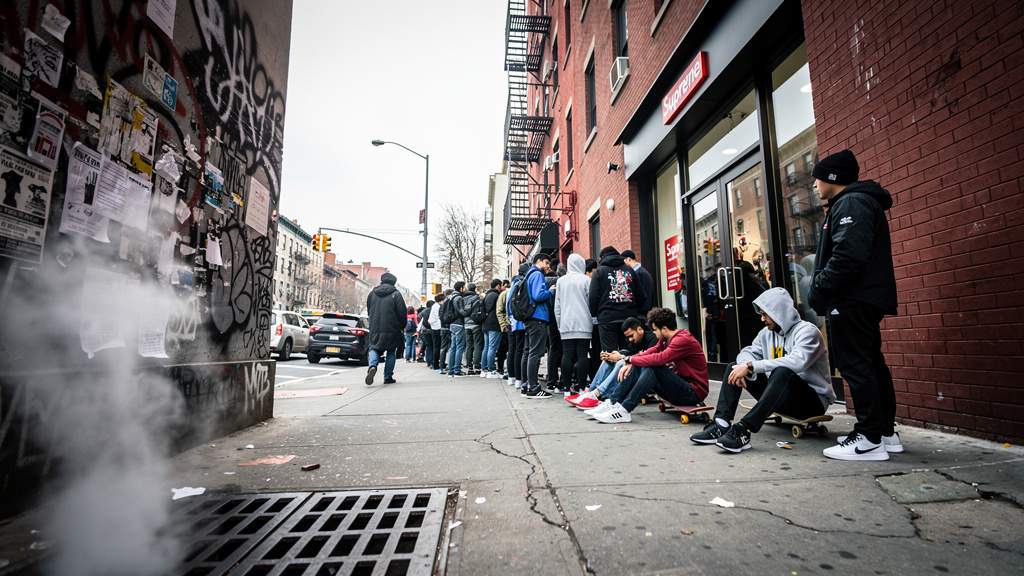
Supreme took that model and weaponized it. James Jebbia opened the first Supreme store on Lafayette Street in New York in 1994, specifically designed so skaters could ride through it. The store layout was a statement of intent: this space belongs to the people who actually skate, not to spectators. The weekly drop model a small quantity of new product released on Thursday mornings, usually selling out within minutes created a scarcity engine that luxury houses would spend the next two decades trying to replicate. Supreme didn't invent the limited release, but it turned that mechanism into a complete business philosophy, one where the queue itself was the advertisement.
Meanwhile, in New York's hip-hop world, clothing was doing something different. Rappers weren't just wearing brands they were using them as a vocabulary. Notorious B.I.G. in a Coogi sweater, Tupac in a Versace chain, Jay-Z mixing Ralph Lauren with Timberlands: these weren't random style choices. They were assertions of arrival, of economic status, of cultural authority. The brands themselves often had no idea what was happening. Tommy Hilfiger famously benefited from hip-hop adoption without having engineered it. What hip-hop culture demonstrated was that streetwear's power lay not in the garment itself but in who was wearing it and what it communicated about them.
By the mid-1990s, these two streams West Coast skate culture and East Coast hip-hop fashion had merged into something that didn't have a clean name yet. "Streetwear" as a label came later, but the thing itself was already circulating through cities, through zines, through the early internet forums where sneakerheads were trading release dates and arguing about colorways on sites like NikeTalk and Crooked Tongues.
The Luxury Crossover and What It Cost the Culture
For most of its first two decades, streetwear existed in productive tension with the fashion establishment. Luxury houses ignored it or condescended to it, which only made it more appealing to the people who wore it. That changed in the 2010s, slowly at first and then all at once.
Virgil Abloh's Off-White, launched in 2013, was the inflection point. Abloh had grown up in the culture he'd been Kanye West's creative director, he understood the codes, the references, the specific grammar of streetwear authenticity. Off-White put quotation marks (literally, as a design motif) around luxury signifiers, which was either a brilliant critique of fashion's pretensions or a very expensive joke, depending on who you asked. Either way, it worked. When LVMH appointed Abloh as Louis Vuitton's men's artistic director in 2018, it was the clearest possible signal that the fashion establishment had stopped condescending and started absorbing.
The Supreme x Louis Vuitton collaboration in 2017 had already made the merger explicit. A box logo hoodie retailing for several hundred dollars at a Louis Vuitton boutique was either the logical endpoint of the culture's ascent or the beginning of its corruption, and fans and critics were genuinely divided. Demna Gvasalia at Balenciaga pushed further, turning oversized silhouettes and deliberately ugly footwear into high-fashion propositions that cost more than most people's rent. The Nike x Dior Air Jordan 1 collaboration in 2021 released at $2,000 retail, immediately trading at multiples of that on the secondary market crystallized how far the distance between the genre's origins and its current price points had stretched.
A $2,000 Nike collaboration sold through a Dior boutique is not streetwear in any meaningful sense it's luxury goods wearing a street aesthetic, which is a categorically different thing. The culture that produced streetwear was specifically about making style accessible outside the