The Power of Fashion: Maria Raveendran's TEDxUTSC Case for Dressing With Intention

The Power of Fashion: Maria Raveendran's TEDxUTSC Case for Dressing With Intention
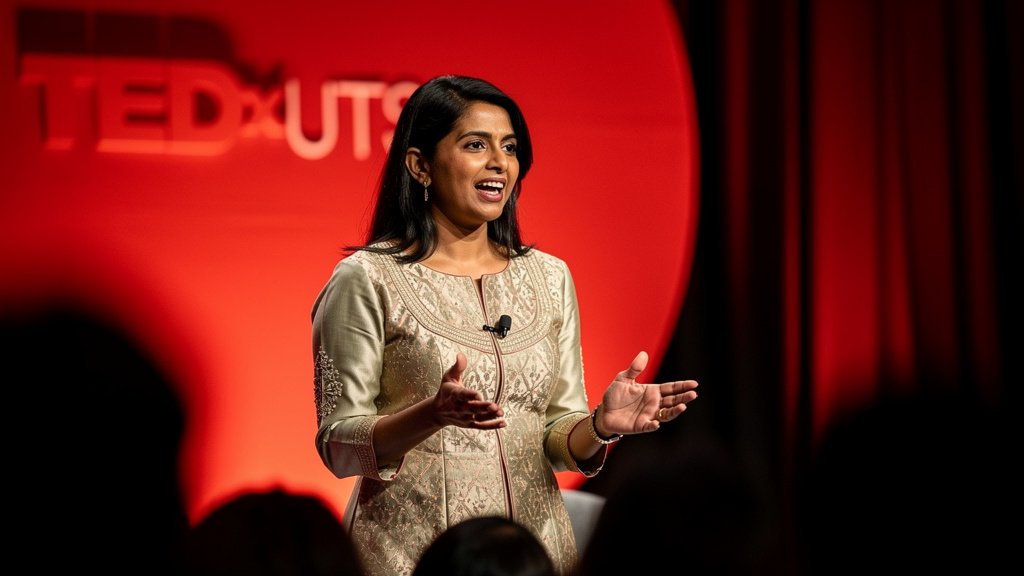
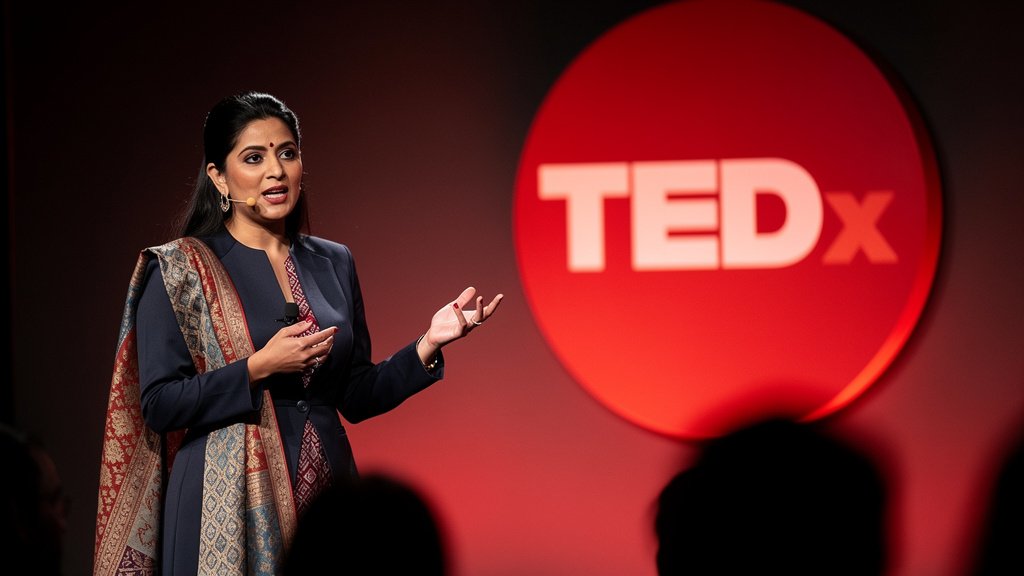
Most of us treat getting dressed as a logistical problem cover the body, meet the dress code, move on. Maria Raveendran's TEDxUTSC talk, "The Power of Fashion," argues that this is one of the more costly mistakes we make every day, not financially, but psychologically. Her argument is sharper than it first sounds, and it's backed by actual science.
Raveendran opens with Adam and Eve specifically the moment they eat the apple, realize they're naked, and sprint around the Garden of Eden grabbing leaves. Her point isn't theological. She uses the story to illustrate how deeply ingrained our most reductive view of clothing is: that it exists purely to cover the body, full stop. Everything else color, cut, personal style gets filed under "frivolous."
That framing, she argues, is exactly what needs to be dismantled.
The Productivity Uniform and Why It Backfires
When Raveendran arrived at university at 17, she did what a lot of high-achieving students do under pressure: she simplified. She built what she calls a "personal uniform" sweatshirts and skinny jeans, every day, because she could eat, sleep, and study in them. She wasn't unusual. The logic behind the productivity uniform is practically cultural gospel, and she points to two of its most famous practitioners to make the case.
Mark Zuckerberg has worn the same gray t-shirt for years. In an interview, he explained his reasoning directly: "I feel like I'm not doing my job if I spent any of my energy on things that are silly or frivolous about my life." Steve Jobs had his own version black turtleneck, dad jeans, white sneakers, every single day. These are not obscure figures. They're among the most admired people in modern business culture, and their wardrobe philosophy has been widely celebrated as a form of cognitive discipline.
Raveendran's critique of this mindset is worth sitting with, because she's not dismissing productivity she's questioning the assumption that fashion and productivity are in opposition. The Zuckerberg argument treats getting dressed as a decision-making tax, something that depletes mental resources better spent elsewhere. But that model only holds if clothing is purely functional. If clothing actively shapes how you think and feel, then the calculation changes entirely, and the gray t-shirt starts to look less like a hack and more like a missed opportunity.
She was also, she admits, buying into the idea that personal style was something you earned a reward you got to collect once you'd built something significant. Start the company first, then worry about the outfit. What she found, eventually, was that the causality ran in the other direction.
The Lab Coat Study That Reframes Everything
The scientific anchor of Raveendran's TEDxUTSC talk on the power of fashion comes from a 2012 paper published in the Journal of Experimental Social Psychology by researchers Adam and Galinsky. The study began with a simple observation: white lab coats are culturally associated with carefulness and attention to detail the traits we project onto doctors and scientists. The researchers wanted to know whether actually wearing a lab coat could transfer those associations onto the wearer's own cognitive performance.
They divided undergraduate students into three groups. The first group wore a white coat and were told it was a painter's coat. The second group wore the identical coat and were told it was a doctor's coat. The third group were shown a doctor's coat but never put it on it simply sat on a table beside them. All three groups then completed attention tasks requiring them to spot differences between nearly identical images.
The results were striking. Group two the students who wore the coat believing it was a doctor's found the most differences and made roughly half the number of errors in attention tasks compared to participants wearing no coat at all. Group one, wearing the painter's coat, showed no meaningful improvement, and group three, who could see the doctor's coat but weren't wearing it, performed no differently either.
Two factors determined whether the coat had any effect: what it symbolized, and whether the person was physically wearing it proximity to the garment alone wasn't sufficient. The researchers named this phenomenon "enclothed cognition" the idea that clothing influences the wearer's psychological processes when two conditions are met simultaneously: the garment carries a symbolic meaning, and the person actually has it on their body. The finding has been replicated and extended in subsequent research, though the literature on enclothed cognition is still relatively young, and the mechanisms behind exactly how and when it generalizes beyond laboratory settings remain an open question that cognitive scientists haven't fully resolved.
What Raveendran takes from this study is something practical rather than academic. If a lab coat can measurably improve attention in people who believe they're wearing a doctor's uniform, then every person has access to some version of that effect through whatever clothing they already associate with their own aspirational traits. She calls these items "personal lab coats."
Personal Lab Coats: Three Examples From Her Own Wardrobe
Raveendran shares three items that function as personal lab coats for her, and the specificity here matters she's not talking about dressing well in some generic sense, but about identifying particular pieces that carry genuine psychological weight for the individual wearing them.
- Crazy trousers bold cuts, wild prints, flares, anything that commands attention. As a self-described serious introvert, she found that wearing something loud forced a kind of behavioral congruence: if the trousers were bold, she had to be bold too, which helped her seize opportunities she might otherwise have let slide past.
- Round glasses which she associates with the archetype of the academic: the professor who walks in on the first day of semester and immediately reads as someone who knows things. Putting them on, she says, made her feel intellectual and scholarly in a way that started to influence how she carried herself in academic settings.
- Bold, unruly eyebrows not a purchase but a choice not to minimize. For Raveendran, thick brows are a marker of her heritage, a symbol of the traits she believes a woman of color needs to thrive: wildness, refusal to be tamed, presence that doesn't apologize for itself.
The point she's making isn't that these specific items would work for anyone else. Round glasses might read as Dumbledore to one person and Harry Potter to another, and neither interpretation is wrong. What matters is the personal symbolic weight whether the item means something to the person wearing it, and whether that meaning connects to traits they're actively trying to inhabit.
The Social Limits of Dressing with Intention
There's a broader argument embedded in Raveendran's talk that she doesn't quite spell out, but it's worth making explicit. The cultural pressure she describes to be maximally productive, to treat anything aesthetic as frivolous until you've "earned" it falls unevenly on people. The Zuckerberg gray t-shirt is celebrated as genius-level efficiency partly because Zuckerberg is already Zuckerberg. For a 20-year-old first-generation university student trying to establish credibility in rooms where they feel like an imposter, the calculus is different. Clothing isn't just self-expression in that context it's one of the few tools readily available for shaping how you're perceived before you've had a chance to prove anything else.
Raveendran is careful not to turn this into a consumerist argument. She ran a deliberate experiment: the average Canadian spends $3,374 per year on clothing, which works out to roughly $9 per day. She gave herself one week's worth of that budget $63 Canadian and built a complete head-to-toe outfit, then used those three purchased pieces alongside clothes she already owned to create twelve additional outfits. Her conclusion is pointed: the value in a personal lab coat is the meaning behind the clothing, not the price tag, and you don't have to buy anything new to start dressing with intention.
That's a more honest position than most fashion content takes, and it's worth acknowledging. The wellness and style industries have a significant financial interest in convincing people that transformation requires purchasing something. Raveendran's framework explicitly rejects that which makes it more credible, not less.
The Imposter Syndrome Connection
One of the more quietly significant moments in her talk is when Raveendran describes the imposter syndrome that gripped her from her first day at university. She was surrounded by peers who seemed to have already done everything founded companies, interned at NASA, built water purifiers. She'd been on her high school lacrosse team for a week before a ball nearly broke her nose and she quit. The gap between where she was and where she wanted to be felt enormous, and that gap had a psychological weight that was affecting her performance and her willingness to take risks.
The fashion intervention she describes didn't change her circumstances it changed her relationship to her circumstances, which is a meaningful distinction. She didn't suddenly have more impressive credentials. She just started feeling less like someone who was pretending to belong and more like someone who was building something. Whether that shift came from the clothing itself, from the act of taking her own preferences seriously, or from some combination of the two is genuinely hard to isolate and Raveendran is honest about that, noting that she was careful not to assume correlation equals causation before she went looking for supporting research.
The imposter syndrome literature is extensive and the remedies proposed are varied, but the enclothed cognition research gives Raveendran's experience a plausible mechanism. If wearing a symbol associated with competence measurably improves performance on attention tasks in a controlled setting, it's reasonable to think that wearing symbols associated with confidence and belonging might reduce the psychological friction of imposter syndrome in everyday settings, even if the effect size and durability outside the lab remain uncertain.
Where Raveendran's Argument Holds and Where It Stops Short
The power of fashion as Raveendran frames it is ultimately an argument about intentionality. Not that everyone should dress boldly, or expensively, or in any particular way but that dressing without intention is leaving a psychological tool unused. The Adam and Galinsky research gives this position more grounding than most self-help arguments about personal style can claim.
Where the talk is thinner is on the social dimension of enclothed cognition. The lab coat study measures individual cognitive performance, but clothing also functions as a social signal, and those signals are read differently depending on who's wearing what and in what context. A young woman of color in a bold outfit in a corporate environment may find that the same clothing that makes her feel confident is being read by others through a different set of associations entirely ones she didn't choose and can't fully control. Raveendran gestures at this with her comment about women of color needing to thrive in society, but the structural dimension of how fashion functions as a social sorting mechanism doesn't get the treatment it deserves.
That's not a fatal flaw in her argument a twenty-minute talk has limits, and the core insight stands on its own. But "dress with intention" lands differently for people who face appearance-based discrimination, and the enclothed cognition research hasn't, to my knowledge, examined how that context modifies the effect.
What Raveendran leaves you with is a genuinely useful reframe: life is an occasion, and every day can be meaningful if you dress like it. That's not a shallow sentiment dressed up in motivational language it's a practical instruction with a psychological mechanism behind it, which is rarer than it should be in conversations about fashion and identity.