ow to style baggy pants men

Meta Description: Learn how to style baggy pants for men with proven proportion rules. Outfit ideas, footwear choices, and common mistakes to avoid for looking effortlessly cool.
Why Baggy Pants Are Back (and Why Most Guys Get It Wrong)
The shift from slim fits to relaxed silhouettes caught plenty of guys off guard. After a decade of skinny jeans being the default, watching baggy pants return to the mainstream feels like suddenly being asked to speak a language you forgot you once knew. The thing is, most men approach baggy pants the wrong way they grab a pair, throw on whatever shirt's on top of the laundry pile, and wonder why they look like they're drowning in fabric rather than making a deliberate style choice.
Here's the uncomfortable truth: baggy pants for men only work when you respect one fundamental rule, and that's proportion. Without it, you risk looking like you grabbed your older brother's hand-me-downs or, worse, a '90s stoner who never quite grew out of that phase. The gap between sloppy and styled is narrower than you think it just requires a few deliberate choices instead of guessing.
The good news? Once you understand how to balance volume on the bottom with the right pieces on top, you open up an entirely new wardrobe direction that's more comfortable, more interesting, and frankly, more masculine than squeezing into anything with "slim fit" in the name.
The Golden Rule: Balance Your Silhouette
Every style guide worth reading repeats the same principle when discussing baggy pants: offset volume below with something fitted above. This isn't about following trends it's about visual architecture. When your bottom half is wide and loose, wearing an equally loose top creates an undefined blob of fabric with no shape whatsoever. That's why the "fitted top, baggy pant" approach works as your starter formula.
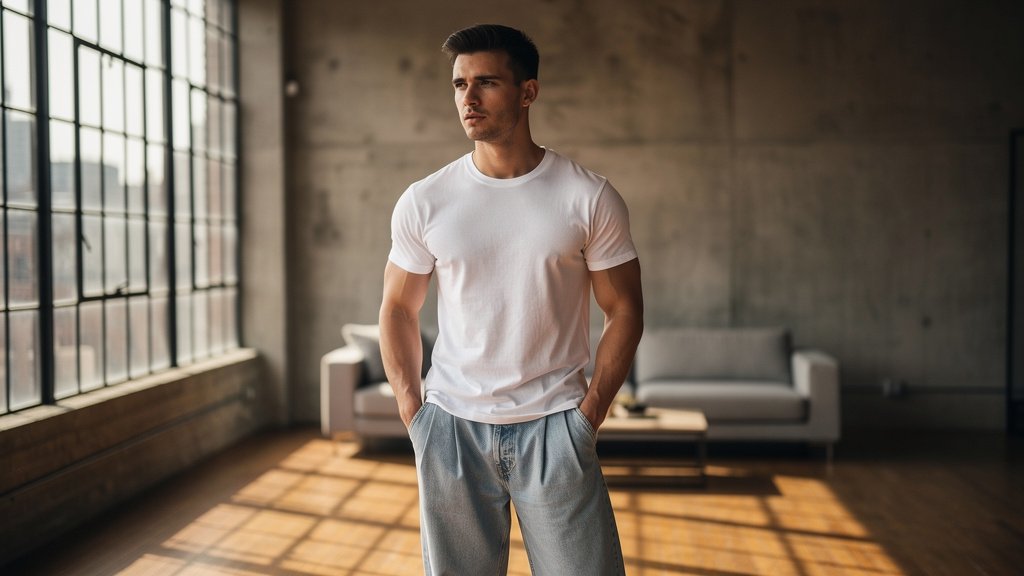
Think of it like architecture: baggy pants create visual weight at your legs, so your torso needs to anchor that weight rather than compete with it. A white slim-fit crewneck tucked into light-wash baggy jeans that combination has been working for years for good reason. The fitted top creates a clean vertical line that draws the eye upward while your pants provide the statement below. It balances without trying too hard.
But here's where most guys get stuck: they hear "fitted" and immediately think "tight." That's a mistake. Fitted means tailored to your frame, not painted on. A well-fitted tee skims your chest without clinging. A button-up with a sharp collar does the work of structuring your upper body. Neither needs to be restrictive they just need to not add extra bulk where you're already carrying volume.
One Reddit user on r/malefashionadvice nailed it: "Wear a well-fitted top, like a crew neck merino sweater, untucked. Your head will be far enough from the bagginess to not look small." That distance between your head and the volume below matters more than you'd think. It keeps your silhouette from collapsing inward.
What to Wear on Top: Your Styling Options
Now that you understand the balance principle, let's talk about what actually works on top. The options break down into a few reliable categories, each creating a different vibe.
A fitted tee is your safest entry point. White, black, or gray simple colors let the pants do the talking while your top disappears into clean lines. This works especially well with baggy denim for weekend brunches or casual Fridays. The look says "I didn't try hard" while actually having tried exactly the right amount.
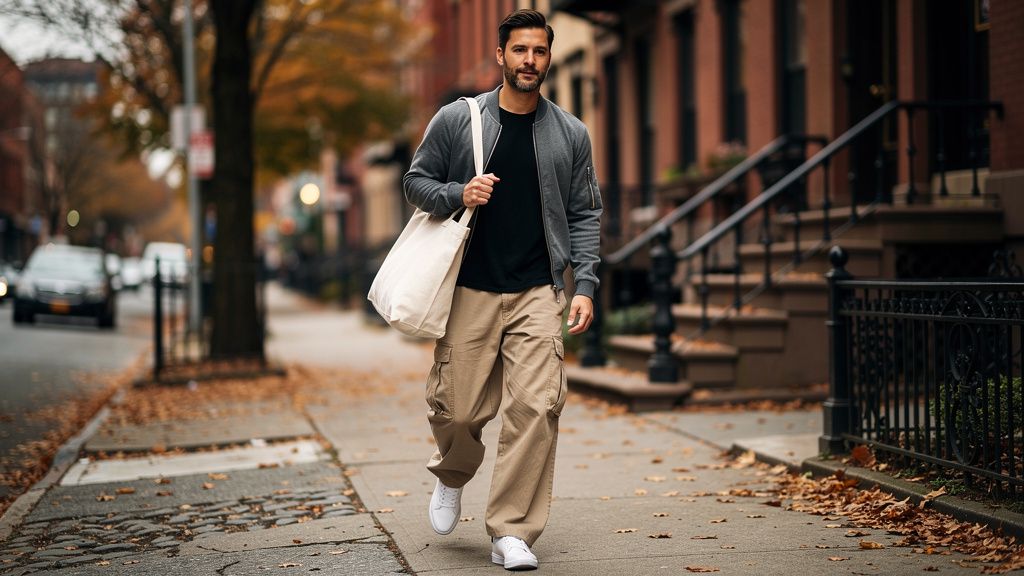
A structured jacket think a crisp bomber, a denim jacket with some stiffness, or even a blazer adds intentionality that plain tees can't match. The structure counteracts the softness of baggy pants in a way that feels deliberate rather than accidental. Oversized hoodies or boxy shirts give off a relaxed, "I don't care" aura, but a structured layer elevates the entire outfit by several notches.
A button-up with a sharp collar works for situations where you want to look put-together without being formal. Tuck it in, add a belt, and you've got a smart-casual look that reads as thoughtful rather than thrown-together. This is the approach that transitions baggy pants from "weekend only" to "I could grab dinner anywhere."
For the more adventurous, the all-baggy look can work but only if you've got the height or the confidence to carry it off. This means oversized top, oversized bottom, but it requires careful attention to length and drape. Most guys should stick to the contrast approach until they've developed an eye for how fabric hangs.
Footwear Makes or Breaks the Look
Here's a section most styling articles gloss over, but it matters enormously: what you put on your feet changes everything about how baggy pants land on your body.
Chunky sneakers are the obvious choice for streetwear vibes. Think New Balances, Yeezys, or any sneaker with some visual weight. The bulk at your feet balances the bulk at your legs, creating a coherent silhouette that feels intentional rather than accidental. This is why the sneaker-boot combination works so well with baggy jeans both elements carry visual weight that complements each other.
Boots anchor the look differently. A pair of Red Wing boots or chunky derbies adds sophistication that sneakers can't match. The more substantial your footwear, the better baggy pants tend to look. Thin-soled canvas shoes often get swallowed by the volume of baggy pants, making your legs look even wider while your feet disappear entirely.
One thing to avoid: socks showing between your pants and your shoes. With baggy pants, the hem sits differently than with slim fits, and visible socks particularly white athletic socks undermine the entire aesthetic you're building. Either go no-show or make your socks a deliberate accent that works with your color palette.
Choosing the Right Baggy Pants
Not all baggy fits are created equal, and knowing what you own matters as much as knowing how to style them. The three main categories you'll encounter each serve different purposes.
Baggy denim is the most versatile. Light wash or dark, they work with almost anything on top and transition from weekend to casual dinner without missing a beat. They're the gateway drug to the whole baggy aesthetic.
Cargo pants lean more streetwear and utilitarian. The multiple pockets add visual interest but also more bulk, so the proportion rules apply even more strictly here. These work best with simpler tops that don't compete with the pocket detailing.
Baggy track pants lean into athleisure airport runs, relaxed weekends, lounging that still wants to look intentional. Pair these with a clean sneaker and a fitted hoodie or tee, and you look like someone who made choices rather than someone who gave up on getting dressed.
The common thread across all three: avoid excessive length or heavy stacking at the hem. Baggy pants should drape, not pool. If you're stacking heavily, either get them hemmed or cuff them otherwise you lose the intentionality that makes the look work.
Common Mistakes to Avoid
Most guys who struggle with baggy pants are making one of a handful of predictable errors. Here's where to be careful.
Going all-baggy on top and bottom without the confidence or frame to carry it is the biggest trap. It reads as "I don't understand how clothes should fit" rather than "I'm making a bold style choice." Unless you've got a clear vision and the pieces to execute it, contrast is your friend.
Ignoring footwear is another killer. Thin-soled shoes get swallowed by baggy pants, throwing off your proportions entirely. Your feet need to hold their own visually.
Wearing baggy pants with the wrong length creates a sloppy appearance that undermines everything else. The hem should drape or break at your shoe, not pool in a heap that looks like you grew three sizes since you bought them.
And finally, don't forget about the waist. A structured waistband whether that's a belt or just the design of the pants themselves anchors the look. Without it, baggy pants can make you look like you forgot to get dressed, not like you made a deliberate style choice.
Making It Your Own
The rules exist to give you a framework, not a prison. Once you've internalized the proportion principle, you can start experimenting. Maybe that means playing with textures pairing rough denim with a soft cashmere sweater. Maybe it means trying color blocking or layering in ways that break the "fitted top, baggy bottom" rule in interesting ways.
What matters is that you're making choices rather than defaults. Baggy pants for men work when they look like you meant to wear them, not like they were the only option left in your closet. The comfort factor is real these cuts breathe better, move better, and feel better than slim fits ever did. But that comfort shouldn't come at the cost of looking like you tried.
I will say this: the biggest knowledge gap in men's fashion advice around baggy pants is how to style them for different body types. Most advice assumes a certain height or build, and there's frustratingly little guidance for shorter men or those with different proportions who want to pull off the look. If you're under 5'8" or carry weight differently, you'll be doing more experimenting than the style guides acknowledge and that's okay. The rules adapt once you understand why they exist in the first place.