Modest Fashion Is Reshaping the Industry: Why Covered-Up Style Has Become a Global Force

Modest Fashion Is Reshaping the Industry: Why Covered-Up Style Has Become a Global Force
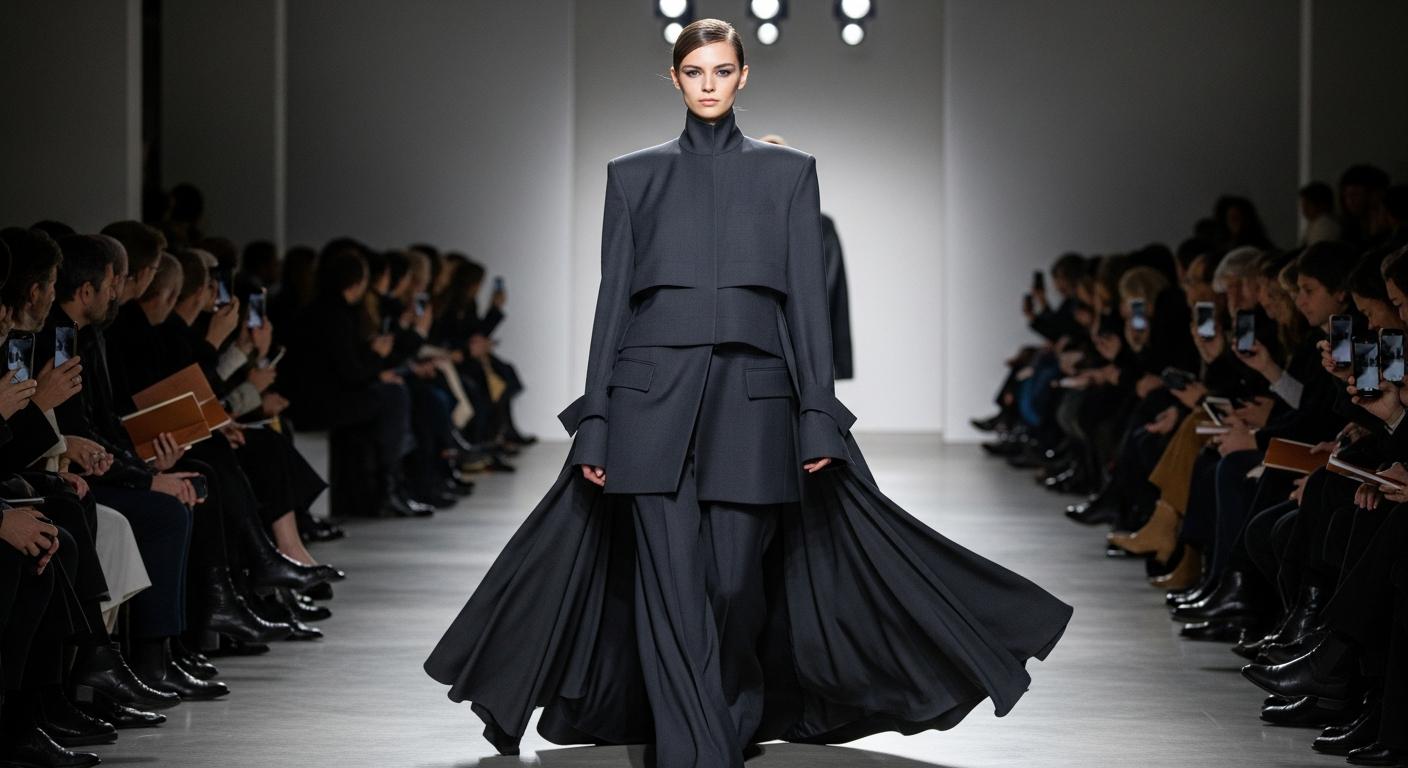
Something shifted on the runways this year. Rick Owens known for provocative, body-baring silhouettes sent models down the SS25 catwalk in oversized blazers that reached their feet, layers of fabric wrapping arms, chest, and neck, leaving almost no skin exposed. When a designer built on shock value pivots toward coverage, you're watching more than a trend; you're watching an industry recalibrate around modest fashion as a serious commercial and creative force.
The numbers back this up. According to Cognitive Market Research, modest clothing in 2024 is already worth $65.8 billion in the United States and $72.5 billion in Europe. Globally, the market hovers around $295 billion, with projections suggesting it could reach $485 billion by 2030. Those aren't niche figures they represent a category that rivals athletic wear and fast fashion in scale.
What Counts as Modest Fashion, Exactly?
There's no universal definition, which is part of what makes the category slippery and interesting. At its core, modest fashion describes clothing that covers more of the body longer hemlines, higher necklines, looser fits, sleeves that extend past the elbow while still prioritizing aesthetics. The term emerged primarily from religious communities where dress codes carry spiritual significance: Muslim women wearing hijab and abayas, Orthodox Jewish women in tichels and below-the-knee skirts, Christian women who cover their heads for worship. But the consumer base has expanded well beyond religious observance.
UK-based designer Saleha Bagas, who has run her modest fashion brand for five years, argues that "modest fashion should complement the diverse lifestyles of all types of women, no matter what their faith or culture." That framing style first, modesty as a design parameter rather than a restriction has helped the movement cross over to women who simply prefer more coverage, whether for professional settings, personal comfort, or aesthetic reasons entirely unrelated to religion.
The Market Drivers Behind Modest Fashion's Growth
Three factors explain why this category has accelerated so dramatically over the past decade, and understanding them matters if you're trying to figure out whether the growth is sustainable or just a cyclical pendulum swing.
First, demographics. The global Muslim population is young and growing, with significant purchasing power concentrated in millennials and Gen Z consumers who expect fashion-forward options rather than the shapeless, utilitarian garments their mothers had to settle for. The Gulf states, Southeast Asia, and increasingly Western Europe and North America represent enormous markets that mainstream brands had largely ignored until recently. When H&M, Nike, and Dolce & Gabbana launched modest collections, they weren't making political statements they were chasing revenue.
Second, social media changed the discovery mechanism entirely. Instagram influences approximately 60% of modest fashion shoppers, according to industry data, creating a direct pipeline between hijabi influencers and their audiences that bypasses traditional fashion gatekeepers. A blogger in Dubai can build a following of millions, demonstrate that covered-up style photographs beautifully, and drive sales to brands that mainstream fashion editors would never feature. The aesthetic case for modesty that fabric, silhouette, and layering can be more visually interesting than exposed skin has been made millions of times over in carefully curated feeds.
Third, and this is where my own observations come in, there's a broader cultural exhaustion with the body-as-spectacle approach that dominated fashion for decades. The modest aesthetic offers an alternative value system: elegance over provocation, craftsmanship over shock, clothes that command attention without demanding it. That resonates with women who feel overexposed by default in an era of constant documentation and surveillance, regardless of their religious background.
What the Runways Are Actually Showing
The high-fashion adoption of modest silhouettes is real, though I'd caution against overstating it. Designers like Rick Owens are incorporating coverage into collections, but they're not abandoning their core aesthetics they're expanding their vocabulary. House of THL, a brand featured in Vogue Arabia's recent Ramadan coverage, blends traditional silhouettes with contemporary details: soft linen dresses with corset belts, kaftans with crystal embellishments. Designer Nighat Ahmad describes her latest collection as "a delicate dance of ethereal styles elevated with refined embellished patterns."
The tension here is instructive. Modest fashion succeeds commercially when it offers genuine style rather than mere compliance with dress codes. The brands gaining traction aren't selling modesty as virtue they're selling beautiful clothes that happen to provide coverage.
The Questions Nobody Seems to Be Asking
Here's what I couldn't resolve from the research: how much of the market growth represents genuinely new spending versus existing consumers finally being counted? When a Muslim woman in London buys a midi dress from a mainstream retailer, does that register as "modest fashion" in market reports, or only when she buys from a brand explicitly marketing to her? The $295 billion figure gets cited everywhere, but the methodology behind it remains opaque, and different research firms produce wildly different estimates I've seen projections ranging from $85 billion to $407 billion depending on how "modest" and "halal fashion" are defined.
There's also a complicated conversation happening within modest fashion communities about appropriation and authenticity. When a luxury house launches a Ramadan capsule collection, is that inclusion or extraction? When non-Muslim influencers adopt modest aesthetics for their visual appeal, does that validate the movement or dilute its cultural significance? I don't have clean answers, and the people I'd most want to hear from the designers and consumers who built this category before it became commercially attractive aren't the ones dominating the coverage.
Where Modest Fashion Goes From Here
The category's long-term trajectory depends on whether brands treat modest consumers as a permanent constituency or a trend to be mined and abandoned. The history of fashion is littered with "emerging markets" that got a few seasons of attention before designers moved on to the next thing. What's different this time is the demographic math: the consumers driving modest fashion growth aren't going anywhere, and their purchasing power is increasing, not declining.
My bet is that modest fashion becomes less of a distinct category and more of a default option within mainstream collections the way athleisure stopped being a separate trend and simply became part of how people dress. The brands that win will be the ones that never made modesty feel like a compromise, because the women buying these clothes never experienced coverage as deprivation in the first place.