How to Measure Your Waist for Jeans: The Complete Guide

How to Measure Your Waist for Jeans: The Complete Guide
Buying jeans online or in stores without trying them on means you'll eventually need to know your numbers. The problem is that most people don't realize there are two completely different ways to measure a waist for jeans one for your body and one for the pants themselves. Getting either one wrong leads to the same frustrating result: jeans that don't fit.
This guide covers both methods in detail, explains why your tape measure might show a different number than the tag on your jeans, and walks you through finding your actual size regardless of what brand you're buying.
Why Measuring Your Waist for Jeans Matters
Your waist measurement is the foundation of how jeans should fit, yet it's also where the most confusion happens. According to New Mexico State University researchers studying pants fitting, measuring the smallest part of your waist is essential because "the waistband needs to sit at your natural waistline for proper fit" but finding that natural line isn't always intuitive.
Most men and women don't know where their natural waist actually sits. They assume it's at their belly button, but that's often too low. The natural waist is the narrowest part of your torso, typically sitting an inch or two above your navel. This is why two people with the same belly-button circumference can wear completely different jean sizes.
Beyond fit, knowing your waist measurement helps you shop smarter. With brands using inconsistent sizing scales something called "vanity sizing" your 34-inch waist might fit into a pair of "32" jeans from one brand and "36" from another. Understanding your actual measurements cuts through that confusion.
How to Find Your Natural Waistline
Before you can measure anything, you need to locate the right spot on your body. The natural waistline isn't where most people think it is.
Stand straight in front of a mirror and bend slightly to one side. Where your torso creases is your natural waist, according to advice shared widely in men's fashion communities. The crease forms exactly where your body bends, which happens at the narrowest point.
If bending doesn't work for you, another method: feel for the top of your hip bones (the bony protrusions just above your pelvis on each side). Your natural waist typically sits about 1 to 2 inches above that line. Place your fingers there and circle your torso you'll feel where the circumference is smallest.
What most sizing guides don't mention is that your natural waist sits higher than where you probably wear your jeans day-to-day. That's because most people wear jeans at their "low waist" or "hip waist," which is why measuring your body and comparing it directly to the size tag rarely works. We'll get into why that disconnect exists shortly.
Step-by-Step: How to Measure Your Body Waist
Once you've located your natural waist, grab a flexible measuring tape the kind tailors use. If you don't have one, a piece of string and a ruler works in a pinch, though it'll require a bit more math.
Stand with your feet together and your posture natural. Don't suck in your stomach you're trying to find your actual waist, not a aspirational one. Wrap the tape measure around your torso at the natural waistline you identified earlier. Keep the tape parallel to the floor. It should sit snugly without digging into your skin.
The tape should be neither too tight nor too loose. According to measurement guides from multiple denim retailers, you want the tape to rest flat against your skin but still have room to move. Think "comfortably snug" like where you'd want a belt to sit.
Look at the number where the tape meets. That's your natural waist measurement in inches. Write it down. Now add about 1 to 2 inches to that number. Why? Because jeans sit lower than your natural waist for most people. This adjusted number gives you a better starting point when shopping for standard-rise jeans.
If you're between sizes say, you measure 33 inches most brands recommend sizing up. Jean waistbands don't have much stretch in non-stretch denim, and going too tight means the button will strain and the fabric will stretch out awkwardly within days.
How to Measure an Existing Pair of Jeans
Sometimes you already own a pair of jeans that fits perfectly, and you want to find that same size in a different brand or style. Or maybe you're shopping secondhand and want to verify the tagged size is accurate. In those cases, you measure the jeans, not yourself.
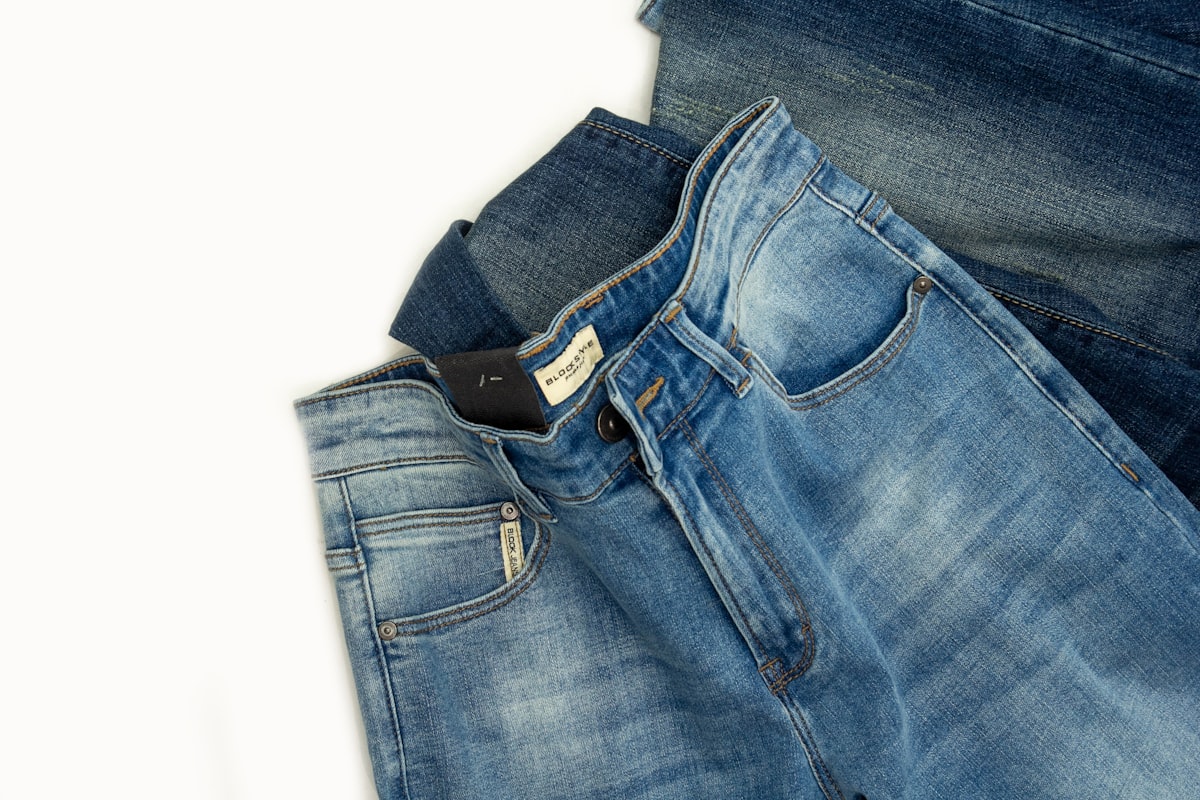
Button and zip the jeans fully. Lay them flat on a table or other hard surface. Smooth out any wrinkles so the waistband lies completely flat make sure the front and back edges aren't bunching or pulling unevenly.
Now measure straight across the waistband from one side seam to the other this is the half-waist. Don't follow the curve of the waistband; measure in a straight line. Multiply that number by two, and you've got the full waist circumference.
This method tells you the actual physical size of the jeans, which might differ significantly from what's on the tag. A pair labeled "32" might actually measure 34 inches across, because brands build in extra room for comfort and movement.
Comparing your body measurement to the jeans' actual measurements reveals the "fit tolerance" how much larger the jeans are than your body. For slim or straight jeans, that gap is usually 1 to 3 inches. Relaxed and bootcut styles often have 3 to 5 inches of extra room. Knowing this gap helps you predict how a new pair will fit based on measurements alone.
Why Your Waist Measurement Doesn't Match Your Jean Size
This is where things get frustrating. You measure your waist at 34 inches, buy size 34 jeans, and they're huge. What's going on?
Two main factors create this gap. First, "vanity sizing" means brands label jeans with numbers smaller than the actual measurements. A size 34 jean might have a waistband measuring 36 or 37 inches the brand is essentially giving you a ego boost while engineering extra room into the garment.
Second, jeans are cut to fit your hips too, not just your waist. Your waist might be 32 inches, but if your hips are 40 inches, the jeans need enough fabric to wrap around that wider measurement. The waistband has to be larger than your actual waist to accommodate your hips. This is why many guys with bigger hips wear jeans with a waist size several inches larger than their actual waist measurement.
Non-stretch denim behaves differently than stretch denim, too. Pure cotton jeans are cut larger because cotton has no give the fabric won't stretch much over time, so manufacturers build in extra room for comfort. Jeans with elastane or spandex can be cut closer to your actual measurements because the fabric has built-in flexibility.
According to denim industry analysis, this disconnect between body measurements and labeled sizes has increased over decades, making it increasingly important to measure both your body AND the jeans themselves rather than relying on the tag alone.
Common Questions About Waist Measurements for Jeans
Should I measure my waist at my belly button or higher?
Measure at your natural waist, which is above your belly button. The natural waist sits at the narrowest point of your torso typically 1 to 2 inches above your navel. This is different from where you wear your jeans day-to-day, which is usually lower.
How do I measure my waist if I don't have a measuring tape?
Use a piece of string, then lay the string flat against a ruler or any straight edge with known measurements. Not ideal, but it works in a pinch. For accuracy, a $5 flexible tailor's tape from any craft or sewing store is worth the small investment.
Why do different brands label the same jeans differently?
Each brand uses its own sizing scale. There's no universal standard in the denim industry, so a "32" in Levi's might fit differently than a "32" in Wrangler or a "32" in a designer brand. Always check the brand's specific size chart and, when possible, measure the jeans themselves.
Should I add inches to my waist measurement when buying jeans?
Yes, adding 1 to 2 inches to your natural waist measurement reflects how jeans typically sit below your natural waist. If your natural waist measures 32 inches, start by trying size 33 or 34 jeans. Adjust up or down based on how the waistband actually sits on your body when you try them on.
What to Remember When Measuring Jeans
- Find your natural waist by bending to the side the crease point marks the narrowest part of your torso
- Measure your body at that natural waistline with a flexible tape, keeping it parallel to the floor
- Add 1-2 inches to your natural waist measurement for standard jeans sizing
- Measure existing jeans by laying them flat, measuring across the waistband, and doubling the number
- Expect a gap between your body measurement and the tagged size due to vanity sizing and hip accommodation
- Non-stretch jeans run larger than stretch jeans for the same tagged size
- Always check brand-specific size charts when shopping don't rely on your measurement alone